


Your liquid resistance starter may still be running — but the maintenance costs, energy losses, and blind spots it creates are a growing liability. Here's how to know when replacement is overdue.
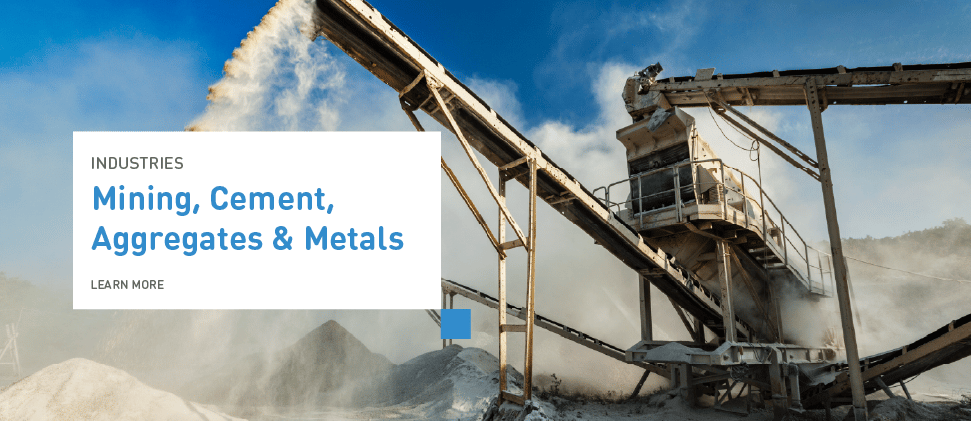
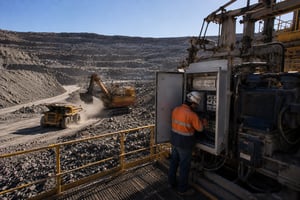
Walk into almost any mine that's been operating for more than 20 years — whether it's a copper operation in Arizona, a gold mine in South Africa, an iron ore processing plant in the Pilbara or an underground coal site in Appalachia — and there's a reasonable chance you'll find a liquid resistance starter somewhere on the motor control lineup. Possibly several.
It started equipment reliably. It was robust. The maintenance team understood it. And in an industry where 'it still works' is a powerful argument against change, the LRS has had extraordinary staying power.
But staying power and optimal performance are different things. And in today's environment — where energy costs, unplanned downtime, and operational intelligence have all become critical business metrics — liquid resistance starter problems are quietly costing mining operations far more than most operators realize.
This article makes the case for liquid resistance starter replacement: how to recognize when a unit is approaching the end of its useful life, and what modern solid-state technology offers that simply wasn't possible when many of these units were installed.
A BRIEF HISTORY
What is a liquid resistance starter — and why mining relied on it
A liquid resistance starter controls motor starting current by submerging electrodes in an electrolyte solution — typically water mixed with sodium carbonate. As the motor accelerates, the electrodes close mechanically, reducing resistance and increasing voltage to the motor. For large squirrel cage induction motors driving conveyors, crushers, mills, pumps, and hoists, this approach was reliable and well understood.
From the 1960s through the early 2000s, LRS was often the best available option for high-horsepower motor starting in mining applications. The technology was proven, parts were available, and mine electrical teams could troubleshoot it without specialized equipment.
What has changed since then is everything around the LRS. Motor sizes have grown. Grid power quality requirements have tightened. Maintenance budgets have compressed even as the cost of a failed start on a critical circuit has escalated. And most significantly: the digital transformation of mining operations has created an expectation that every piece of electrical equipment generates data that feeds into predictive maintenance, SCADA integration, and operational analytics.
TECHNICAL REALITY
The hidden cost of keeping your LRS running
The capital cost of the original LRS is long since depreciated. But liquid resistance starter maintenance cost is real and consistently underestimated when it's spread across maintenance budgets rather than appearing as a single line item.
Electrolyte concentration must be checked and adjusted regularly — evaporation and contamination shift resistance characteristics and change starting performance. Electrodes corrode and wear, requiring periodic replacement. The mechanical drive mechanism is a point of failure. Seals degrade and electrolyte leaks create housekeeping and environmental compliance issues. In high-temperature underground environments exceeding 35°C, evaporation accelerates and maintenance intervals compress.
Then there is the energy equation. Every start dissipates excess energy as heat in the electrolyte — which in underground environments creates additional cooling load at a point where cooling is already one of the most significant operating cost line items. On a 1,000 kW motor, the energy lost in the electrolyte during a single start is meaningful, repeated across dozens of starts per shift.
Finally, there is performance variability. LRS starting characteristics depend on electrolyte temperature and concentration — both of which change. A starter commissioned at ambient conditions behaves differently when the electrolyte is hot, concentrated, or partially depleted. This creates unpredictable mechanical shock on couplings, gearboxes, and driven machinery that doesn't show up until a coupling fails at 2 AM on a Sunday.
WARNING SIGNS
7 signs your liquid resistance starter needs to be replaced
Maintenance teams often have a strong instinct for 'it just needs a top-up' versus 'this unit is approaching end of life.' These signs help translate that instinct into a business case for liquid resistance starter replacement.
1. Inconsistent starting behavior across identical conditions
If the motor takes noticeably longer to reach full speed on some starts versus others, electrolyte condition is varying beyond acceptable tolerance. This creates unpredictable torque profiles and is a leading indicator of mechanical damage to connected equipment.
2. Maintenance intervals shorter than 3 months
If electrolyte replenishment, electrode inspection, or mechanism adjustment is required more frequently than quarterly, the unit is working harder than its design intended — typically because operating conditions have changed or the unit is undersized for current duty cycles.
3. Visible electrolyte residue outside the containment zone
Any evidence of electrolyte migration outside the sealed compartment is a maintenance and environmental compliance issue. Sodium carbonate solutions cause corrosion damage to nearby electrical components. Repeat occurrences indicate seal degradation that is rarely fully corrected in an aging unit.
4. Electrode replacement within the past 18 months on a critical circuit
Electrode replacement on a non-critical motor is routine. On a circuit controlling a hoist, primary crusher, or dewatering pump, it signals a degradation cycle. The next failure mode after electrode wear is typically mechanism failure — not a field-repairable event.
5. No integration with current SCADA or control systems
LRS installed before your current control infrastructure almost certainly has no digital communication capability. Running a critical motor with no current monitoring, no thermal protection feedback, and no fault logging is an operational blind spot modern facilities should not accept.
6. Coupling or gearbox failures at a higher-than-expected frequency
Inconsistent starting torque is a significant contributor to premature coupling and gearbox wear. If your reliability team is replacing downstream mechanical components more often than expected, LRS starting characteristics may be a contributing factor that does not appear in root cause analysis.
7. Replacement parts on extended lead time or no longer available
Many LRS manufacturers from the 1990s and 2000s have discontinued these product lines. If you are sourcing from aftermarket suppliers or cannibalizing spare units, you are already in end-of-life territory. The risk of a critical circuit failing with no repair path is not acceptable.
THE PATH FORWARD
What liquid resistance starter replacement looks like in 2026
The case for replacement gets stronger every year, but it's the maturity of the replacement technology — not just the aging of the installed base — that has changed the calculus. The solid-state starting equipment available today bears little resemblance to the early electronic alternatives that prompted many sites to stay with their LRS units in the first place.
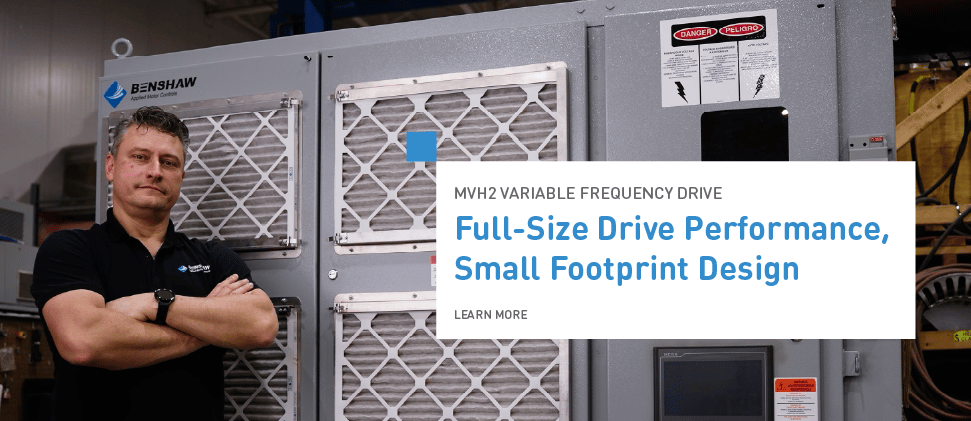
For most mining applications in the LRS power range, replacement now means one of two paths.Medium-voltage soft starters handle high-inertia loads — conveyors, crushers, mills, dewatering pumps — with controlled torque ramps, current-limited starting, and the ability to start across the full range of operating conditions without electrolyte temperature or concentration affecting performance. Where speed control adds value beyond starting — variable throughput, energy recovery, or process optimization —medium-voltage drives extend that capability across the full duty cycle.
Either path delivers the operational characteristics an aging LRS cannot: repeatable starting torque shift after shift, no electrolyte to manage, no seals to degrade, no sodium carbonate residue near sensitive equipment, and energy losses measured in fractions of a percent rather than full percentage points per start. Just as importantly, the equipment integrates natively with modern control infrastructure — every start, every fault, every thermal event logged, time-stamped, and available to SCADA, historians, and predictive maintenance platforms without bolt-on instrumentation.
The transition itself has matured as well. Footprint-compatible cabinet designs,pre-engineered retrofit packages, and commissioning support built around mining downtime windows mean replacement projects are routinely completed in scheduled outages rather than requiring extended shutdowns. Spare parts pipelines are decades-long, not measured against the remaining life of a 1990s product line.
Making the call
If your team is seeing two or more of the seven signs on a critical circuit, the unit is telling you what it needs. The remaining decision is whether replacement occurs on your schedule — with a planned outage, an engineered retrofit, and commissioned-in solid-state equipment — or on the failure's schedule, with emergency procurement, unplanned downtime, and whatever spare LRS components can still be found.
A short application review is usually enough to determine which path fits the asset, the duty cycle, and the budget cycle. The conversation is worth having before the failure forces it.