






The Blower Motor Trips at 2 AM on a Saturday
Your conveyor belt stops mid-shift. The blower feeding a kiln or aeration basin drops offline. The overload relay has tripped again, and there's no obvious fault in the motor, the driven equipment, or the power supply. This is a nuisance trip, and it costs your facility far more than the ten minutes it takes to reset the starter.
Nuisance trips on blower and conveyor motor starters account for a disproportionate share of unplanned downtime in water treatment plants, cement operations, and material handling facilities. The root causes are specific to these applications, and so are the fixes. This guide walks through the diagnostic process, the most common culprits, and the preventive measures that keep your motors running on your schedule.
What Counts as a Nuisance Trip
A nuisance trip occurs when a motor starter's protection device opens the circuit without a genuine fault condition present. The overload relay, the thermal element, or the electronic trip unit responds to a condition that does not actually threaten the motor or the driven equipment.
This is distinct from a legitimate protective trip. A legitimate trip responds to an actual overcurrent, phase loss, locked rotor, or ground fault. A nuisance trip responds to normal operating variations that fall outside the protection device's configured tolerance, but do not represent a real hazard.
The distinction matters. Resetting a legitimate trip without addressing the root cause damages equipment. Treating a nuisance trip as a real fault wastes maintenance hours chasing a failure mode that doesn't exist. Both paths cost money. Accurate diagnosis is what separates the two.
Why Blowers and Conveyors Are Prone to Nuisance Trips
Blower and conveyor applications create operating conditions that stress motor protection settings in ways that constant-speed, constant-load applications do not.
High Inrush on Blower Starts
A centrifugal blower started across the line draws 6 to 8 times its rated current during acceleration. On larger blowers (50 HP and above), acceleration times can extend to 10 or 15 seconds depending on the fan inertia and the ductwork pressure. This extended inrush heats the overload relay's thermal element and can push it past its trip curve even though the motor is operating normally.
Benshaw EMX4 series soft starters address this directly by controlling the voltage ramp during acceleration, reducing inrush current to 2 to 4 times rated current and managing the thermal stress on the motor and the protection devices throughout the start cycle.
Variable Loading on Conveyors
Belt conveyors experience significant load variation depending on material feed rate, belt incline, and ambient temperature. A conveyor that runs at 60% load for most of the shift can see load spikes above 100% rated current when wet material hits the belt or when the belt is started under full load after a mid-shift stop.
If the overload relay trip class does not account for these transient peaks, the result is a nuisance trip during a load spike that the motor could handle for the few seconds it lasts.
Ambient Temperature Effects
Motor control enclosures in cement plants, foundries, and outdoor installations routinely exceed 40°C (104°F) ambient. Bimetallic overload relays are temperature-sensitive by design. A relay rated at 40°C ambient will trip at a lower current when the enclosure temperature reaches 50°C or 55°C. This derating effect is often overlooked during initial commissioning and only shows up as nuisance trips during summer months or when adjacent equipment adds heat to the enclosure.
Voltage Imbalance and Supply Quality
Phase voltage imbalance drives up motor heating disproportionately. In the most affected phase, the increase in temperature rise is approximately two times the square of the imbalance percentage (per NEMA MG-1 guidelines) — so a 2% imbalance adds roughly 8% to temperature rise, while a 3.5% imbalance pushes it to about 25%. Because the effect climbs with the square of the imbalance, a supply problem that looks minor on a voltmeter can meaningfully erode a motor's thermal margin. NEMA recommends that voltage imbalance at the motor terminals stay at or below 1%.
In facilities where the supply transformer also feeds large single-phase loads or welding equipment, voltage imbalance during production hours can push motor current high enough to trigger overload protection on one or more phases. Current imbalance typically runs 6 to 10 times the voltage imbalance, so even 1 to 2% on the voltage side can produce a phase current well above the others — enough to trip an overload that is correctly set for a balanced supply.
Step-by-Step Diagnostic Process
Diagnosing nuisance trips on blower and conveyor starters follows a structured elimination process. Work through each step before concluding that a protection device is "too sensitive" or needs adjustment.
Step 1: Document the Trip Pattern
Before resetting anything, record the time of day, the operating condition (startup, steady state, load change), the ambient temperature, and any fault code displayed by the starter. Benshaw EMX4i starters log fault history with timestamps and operating data, which eliminates guesswork on repeat events.
Look for patterns. Trips that occur exclusively during startup point to inrush or acceleration issues. Trips during peak production suggest load-related causes. Trips that correlate with time of day or season indicate thermal or supply quality factors.
Step 2: Verify Motor Current Under Load
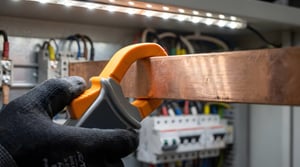
Clamp a true-RMS ammeter on each phase conductor at the motor terminals. Measure current under normal operating load and during the heaviest expected load condition. Compare these readings to the motor nameplate full-load amps (FLA).
If any phase current exceeds the nameplate FLA during normal operation, the motor may be undersized for the application or the driven load has changed. If current is below FLA but the overload still trips, the trip setting or trip class may not match the application.
Step 3: Check Phase Voltage Balance
Measure phase-to-phase voltage at the motor starter line terminals with the motor running under load. Calculate the voltage imbalance percentage using the NEMA formula: (maximum deviation from average voltage / average voltage) x 100. If imbalance exceeds 1%, investigate the supply transformer loading and the facility's single-phase load distribution.
Step 4: Inspect the Protection Device Settings
Verify that the overload relay or electronic trip unit is set correctly for the motor. Check three parameters: the current setting (should match nameplate FLA, not the circuit breaker or the cable rating), the trip class (Class 10 for standard duty, Class 20 or 30 for high-inertia blower and conveyor loads), and the thermal memory function (if available, this prevents premature trips on closely spaced restart attempts).
Benshaw's EMX4 series starters include configurable motor thermal modeling that tracks actual I²t heating in real time rather than relying on a fixed bimetallic response. This eliminates the gap between the protection device's assumed thermal state and the motor's actual thermal condition.
Step 5: Evaluate the Starting Method
Across-the-line (ATL) starting subjects the motor and the protection devices to the full locked-rotor current for the entire acceleration period. For high-inertia blower fans and loaded conveyors, this inrush duration often exceeds what a Class 10 overload relay can tolerate without tripping.
Soft starters reduce the voltage applied to the motor during acceleration, lowering starting current to a configurable level (typically 2 to 4 times rated current) and extending the ramp time to match the load's inertia. This keeps the motor protection devices comfortably below their trip thresholds throughout the start. Benshaw EMX4 and CSXi series soft starters are built for exactly this type of application, with adjustable current limit, kick start for breakaway torque, and configurable acceleration ramps.
Step 6: Inspect Connections and Conductors
Loose connections create resistance that generates heat and causes uneven current distribution across phases. Use an infrared camera to scan all terminations from the line side of the starter through the motor junction box. Temperature differentials exceeding 10°C between similar connections indicate high-resistance joints that need to be cleaned and re-torqued.
Connections that look fine at commissioning loosen under thermal cycling, especially in environments with wide temperature swings between operating and idle periods. This is one of the most common and most overlooked causes of nuisance trips on conveyor and blower motors.
Step 7: Test Motor Insulation
Use a megohmmeter to test winding insulation resistance phase-to-phase and phase-to-ground with the motor disconnected. Readings below 1 megohm per kilovolt of operating voltage indicate insulation degradation that causes leakage current. This leakage can be enough to push the apparent motor current above the overload relay's trip threshold on one or more phases without triggering a ground fault trip.
Root Causes and Corrective Actions
| Root Cause | Typical Symptom | Corrective Action |
|---|---|---|
| Extended inrush on high-inertia load | Trip during startup, no fault at steady state | Install a soft starter (Benshaw EMX4 or CSXi) to control acceleration current |
| Overload relay trip class too low | Trip during startup on loads that take 10+ seconds to accelerate | Change to Class 20 or Class 30 relay; or switch to electronic overload with configurable trip class |
| Ambient temperature above relay rating | Trips during hot weather or in high-temperature enclosures | Add enclosure ventilation or cooling; relocate relay; use electronic overload with ambient compensation |
| Phase voltage imbalance | One phase consistently draws higher current | Balance transformer loading; investigate single-phase loads on supply |
| Loose or corroded connections | Intermittent trips, hot spots visible on IR scan | Clean and re-torque all connections per manufacturer specs |
| Motor insulation degradation | Gradual increase in trip frequency over months | Test insulation resistance; plan motor replacement or rewind if below threshold |
| Incorrect FLA setting on overload | Trips at normal running load | Verify setting matches motor nameplate FLA, not cable or breaker rating |
| Load changes after commissioning | Trips after process modification or equipment change | Re-measure actual load current; resize motor or adjust protection settings |
How Soft Starters Prevent Nuisance Trips on Blowers and Conveyors
The single most effective corrective action for inrush-related nuisance trips on high-inertia loads is replacing the across-the-line starter with a soft starter. The reason is straightforward: a soft starter controls the voltage applied to the motor during acceleration, which directly controls the current drawn during the start.
For blower applications, Benshaw EMX4 soft starters reduce starting current to a configurable level (typically 300% to 450% of FLA, compared to 600% to 800% with ATL starting). The acceleration ramp is adjustable from 1 to 120 seconds, allowing the start profile to match the fan's inertia characteristics. The motor protection built into the EMX4 includes current-based thermal modeling, phase loss detection, current imbalance monitoring, and stall protection, all of which operate independently of external overload relays.
The EMX4 series include configurable stop ramps for soft stopping. On blower applications, a controlled deceleration prevents backdraft through ductwork. On conveyors, a controlled stop reduces belt slap and material spillage at transfer points.
Preventive Measures That Reduce Trip Frequency
Preventing nuisance trips is less expensive than diagnosing them repeatedly. These measures address the most common contributing factors in blower and conveyor installations.
Match the Protection to the Application
Use Class 20 or Class 30 overload relays for high-inertia blower and conveyor applications. Standard Class 10 relays are designed for motors that reach full speed in under 10 seconds, which does not describe most centrifugal blowers or loaded belt conveyors. Electronic overloads with adjustable trip classes offer the flexibility to match the protection to the actual duty cycle without replacing hardware.
Control Enclosure Temperature
Install forced ventilation or thermostatically controlled cooling fans in motor control enclosures located in high-temperature environments. Monitor enclosure temperature and set alarms at 5°C below the protection device's ambient rating. This gives your maintenance team time to act before the derating causes a trip.
Schedule Starts to Avoid Thermal Stacking
Closely spaced restart attempts on a blower or conveyor that has just tripped build residual heat in the overload relay's thermal element. If the relay has thermal memory (most electronic overloads do), it remembers the heat from the previous start attempt and trips faster on the next one. Allow the relay's thermal memory to decay before attempting a restart, or use a starter with configurable cooldown timers like the Benshaw EMX4i.
Maintain Connections on a Regular Schedule
Add motor starter connection re-torque to your annual maintenance program. Thermal cycling loosens connections over time, and the resulting high-resistance joints create localized heating that affects both protection accuracy and motor performance. A torque wrench and an IR camera are the only tools required, and the payoff in reduced trips is significant.
Monitor Supply Voltage Quality
Install a power quality meter on the supply feeding your motor control lineup. Log voltage imbalance, harmonic distortion, and voltage sags over a representative production period. If imbalance exceeds 1% or harmonic distortion exceeds 5% THD, work with your utility or facility electrical engineer to address the source.
When to Escalate Beyond Basic Troubleshooting
If you have worked through the diagnostic steps above and the trips persist, the cause may be deeper in the facility's electrical infrastructure or in the motor itself. Conditions that warrant further investigation include:
- Trips that occur on multiple starters simultaneously, suggesting a supply-side disturbance
- Motor insulation resistance readings that are declining month over month
- Bearing noise or vibration indicating mechanical degradation that increases motor loading
- Harmonic distortion from variable frequency drives on adjacent circuits affecting overload relay accuracy
- Repeated trips after a motor rewind that may have changed the motor's thermal characteristics
Benshaw's field service team supports troubleshooting for complex motor starting and protection issues, including on-site commissioning, starter configuration, and application review for blower and conveyor installations. A short application review is usually enough to determine which path fits the asset, the duty cycle, and the budget.
The conversation is worth having before the failure forces it.
Frequently Asked Questions
What is the most common cause of nuisance trips on blower motors?
Extended inrush current during startup is the most frequent cause. Centrifugal blowers with high fan inertia require long acceleration times that exceed the thermal capacity of standard Class 10 overload relays. Soft starters like the Benshaw EMX4 reduce starting current and match the acceleration ramp to the load, eliminating inrush-related trips.
How do I determine the correct trip class for my conveyor motor starter?
Measure the actual acceleration time from standstill to full speed under the heaviest expected load. If acceleration takes 10 seconds or less, Class 10 is appropriate. If acceleration takes 10 to 20 seconds, use Class 20. For acceleration times exceeding 20 seconds, use Class 30 or an electronic overload with adjustable trip class settings.
Can ambient temperature cause a motor overload relay to trip even when the motor is running normally?
Yes. Bimetallic overload relays are rated for a specific ambient temperature, typically 40°C. When enclosure temperatures exceed this rating, the relay's trip threshold drops, meaning it will trip at a lower current than its nominal setting. Electronic overloads with ambient temperature compensation eliminate this derating effect.
Should I increase the overload relay current setting to stop nuisance trips?
Only after verifying that the current setting matches the motor nameplate FLA and confirming that the motor is not genuinely overloaded. Increasing the setting beyond the motor's rated current removes the protection the overload relay is designed to deliver and risks motor winding damage from sustained overcurrent. Address the root cause instead of masking it with a higher trip setting.
What is the difference between a soft starter and a VFD for preventing nuisance trips?
A soft starter controls motor voltage during acceleration and deceleration, reducing inrush current and mechanical stress at a lower cost and complexity than a variable frequency drive (VFD). A VFD controls motor speed continuously and is appropriate when the application requires variable speed operation. For blowers and conveyors that run at constant speed and only need controlled starting, a soft starter delivers the protection needed at a fraction of the cost and footprint. Benshaw's EMX4 and CSXi soft starters are designed for this exact duty cycle.
How does Benshaw's motor thermal modeling differ from a standard bimetallic overload relay?
The Benshaw EMX4 series uses current-based I²t thermal modeling that tracks the motor's actual thermal condition in real time. A bimetallic relay responds to the heat generated by current flowing through its own thermal element, which is an indirect approximation. The EMX4's electronic model accounts for starting duty, running current, and cooling time with greater accuracy, reducing both nuisance trips and the risk of under-protection.